


Neuroscience! Recent studies and research on brain functioning shed light on how our hearts are genuinely formed. And there’s far more to our spiritual formation than church events and Bible studies. As we might expect, what modern neuroscientists are discovering aligns with what Jesus and the apostles modeled over 2,000 years ago.
TRANSCRIPTION
Time and Spiritual Formation
Hey Jesus, I have a few questions.
I have a lot of questions I’m going to ask Jesus when I meet Him face to face. Why did you create mosquitoes? May I see a sample of your carpentry handiwork? (Can you imagine a table and chair set made by God?) Did Adam have a belly button?
Here’s another topic I’d like to ask Jesus about – His miracles. The Gospels record around 37 of them. Have you ever thought about what’s common in virtually all of them?
Jesus supernaturally changed something…physically.
Think about it. He changed water into wine, somehow restructuring its chemical properties without touching it.
He fed thousands of people…twice, using just a few scraps of food.
He ignored the physical laws of nature: He walked on water, and He told storms to calm down, and they did.
More than once He knew where large schools of fish were without a sonar. Speaking of fish, Jesus knew when and where a certain fish would be caught with a coin in its mouth.
I went fishing once as a kid in Pennsylvania and caught the sole of a Converse sneaker. But I didn’t know I was going to do it, and it didn’t help pay my taxes.
The majority of Jesus’ recorded miracles were physical healings. He healed the deaf, dumb, lame, sick, and disabled. Dead, in the case of Lazarus.
He exercised control over the physical world, but He also controlled the spiritual world, the unseen realm, as it were. He cast out demons. Sometimes this resulted in physical protection and healing – the child who threw himself into fires, or the graveyard demoniac who had been cut and bruised from his chains.
But here’s what I want to ask Jesus about. Most of the recorded miracles involve instant changes to the physical world.
But there aren’t any recorded miracles of Jesus instantly healing…human relationships.
There’s no story of a couple coming to Jesus and asking them to instantly “heal their marriage.” Or for Jesus to miraculously heal a family rift or a fight between brothers. To instantly repair unforgiveness over a broken contract or for some community feud to suddenly turn into hugs and well-wishes.
Jesus made sudden changes in the physical and spiritual realms, but apparently wasn’t asked, nor did He offer, to instantly heal broken relationships.
Let’s look at our four relationships: with God, with others, with ourselves, and with creation and culture.
For some people, salvation is a sudden event, but not for everyone. Regardless, after salvation, the ongoing formation of our hearts is a time-consuming, life-long, intentional process. Our reconciled relationship with God may start suddenly, but it deepens and grows through time.
As we chatted about in Season 2, the process of digging into our own hearts to understand the ideas and desires that drive us is time-consuming. Back in Episode 8, we discovered that hidden ideas are formed in us in three ways: initially, abruptly, and progressively. Most of the time, the desires and ideas in our hearts are formed progressively.
Falling in love, cultivating a healthy marriage, pursuing the hearts of our kids, restoring a relationship that’s been broken – these relationships take time to deepen and flourish.
Even our relationship with creation and culture takes a lot of time. Just think about how long it normally takes for Ideas in the Air to seep into our soils. In Episode 24, we explored how many of the unconscious ideas you and I are governed by now are the result of changes in culture over the past four to five hundred years!
So, although we may be introduced to someone quickly (God, our future spouse, a new friend), forming deep, abiding relationships takes time.
So why didn’t Jesus instantly heal relationships, as He did physical bodies? Perhaps it’s because Jesus knows anthropology better than we do. The human heart, the bedrock of our desires and ideas, tends to form over time. Spiritual formation requires time. Relational formation, healing, and deepening take time. Maybe instant relational healing isn’t good for us – maybe it’s not in our best interests.
Time! What a mysterious and fabulous Key Element of our Discipleship. And it can be really hard to grasp. We have become so accustomed to instant gratification that we often forget that the heart doesn’t work like our DoorDash order.
But here in Season 3 – we’re going to take “time” to talk about “time.” See what I did there?
Neuroscience!
Hey, last episode I promised you some neuroscience, so let’s talk neuroscience!
As Christians, we recognize that in our current age, relational trauma is now standard fare. We cannot consider modern discipleship without considering broken hearts, broken minds, and broken bodies. Too many of our Christian brothers and sisters, not to mention our friends outside the faith, are the walking wounded.
Bessel Van Der Kolk is considered one of the pioneers and innovative leaders in the treatment of PTSD, and he wrote a fascinating book called The Body Keeps the Score.
He opens his book with these words, “One does not have to be a combat soldier, or visit a refugee camp in Syria, or the Congo to encounter trauma. Trauma happens to us, our friends, our families, and our neighbors. Research by the Centers for Disease Control and Prevention has shown that one in five Americans was sexually molested as a child; one in four was beaten by a parent to the point of a mark being left on their body; and one in three couples engages in physical violence. A quarter of us grew up with alcoholic relatives, and one out of eight witnessed their mother being beaten or hit.”[1]
We often hear trauma referred to as “Big T” or “Little t.” Big T traumas are some of what Van der Kolk just listed: war, sexual abuse, physical abuse, horrible accidents, and the like.
“Little “t” traumas are highly distressing events that affect individuals on a personal level but don’t fall into the big “T” category. Examples of little “t” trauma include non-life-threatening injuries, emotional abuse, death of a pet, bullying or harassment, and loss of significant relationships.”[2]
Things like betrayal, divorce (whether you’re the spouse or the child), or emotional and physical abandonment cause trauma, and can be Big T or Little t depending on the circumstances.
The point is we’ve all been victims of trauma, whether it’s “Big T” or “Little t.” Christians tend to drastically minimize “Little t” trauma, even though the Bible is clear that suffering is part of the human experience, and so it’s part of everyone’s discipleship story.
For many Christians, exploring or even talking about Little t trauma supposedly indicates a lack of faith, or a lack of perseverance, or weakness. God forbid we talk about our weaknesses in church.
Van der Kolk goes on to explain how trauma results in the “loss of self,” something we have already identified that discipleship is designed to recover. Trying to make sense of suffering – any suffering – often results in various coping mechanisms that drive our hearts into numbness or anger or hopelessness.
The Importance of “Know Thyself”
Van der Kolk was moved early on in his career by one of his teachers, who said, “most human suffering is related to love and loss and that the job of therapists is to help people ‘acknowledge, experience, and bear’ the reality of life – with all its pleasures and heartbreak. ‘The greatest sources of our suffering are the lies we tell ourselves…’ He often said that people can never get better without knowing what they know and feeling what they feel.”[3]
“The greatest sources of our suffering are the lies we tell ourselves.” Instead of pressing into our suffering, instead of inviting and allowing others to extend compassion (which literally means “with suffering”), we instead cope. And we lie to ourselves, and the lies eventually become truth to us. And we lose ourselves in the process.
This is why the practice of Heartview is so important. We may lie to ourselves, but our hearts have a way of expressing reality whether we want them to or not. And we need the Holy Spirit and a community of people who love us to help us translate the messages our hearts are sending.
Later in the book, Van der Kolk breaks down the various parts of the brain and explains how a person must engage their story to return to wholeness. “Most of our conscious brain is dedicated to focusing on the outside world: getting along with others and making plans for the future. However, that does not help us manage ourselves. Neuroscience research shows that the only way we can change the way we feel is by becoming aware of our inner experience and learning to befriend what is going on inside ourselves.”[4]
Theologians talk about the inner self, the inner experience, and the inner man with some frequency. To some of our modern evangelical ears, exploring our “inner person” sounds like New Age mumbo-jumbo. But to some of the greatest Christian minds of the last 2,000 years, exploring our inner person is an accepted and necessary aspect of a practice called “contemplation.” We contemplate and dwell on God and His character, and we search our hearts…not because we’re trying to become God or find our salvation in ourselves, but because we want to grow to think, act, and love the way Jesus does.
It’s fashionable in Christian circles today to downplay the suffering in our stories and compare it to others who have suffered more. We’ll always find someone who has suffered more – it makes us feel better to find such a person.
In Man’s Search for Meaning, Viktor Frankl wrote, “A man’s suffering is similar to the behavior of a gas. If a certain quantity of gas is pumped into an empty chamber, it will fill the chamber completely and evenly, no matter how big the chamber. Thus, suffering completely fills the human soul and conscious mind, no matter whether the suffering is great or little. Therefore, the “size” of human suffering is absolutely relative.”[5]
Pain is like a gas. It doesn’t matter how much of it there is; it fills the room.
The point is, we all experience suffering to one degree or another, and it serves little purpose to minimize or ignore it. How we choose to respond to it has a tremendous impact on our discipleship.
If we accept that an essential part of discipleship is exploring who we are with our King, are we “befriending” our inner experience? Or are we ignoring it, coping with it, or, as is so often the case today, using our religion to duck and cover from it?
Neuroscientist Curt Thompson sums this thought up nicely: “Christian anthropology reveals, perhaps somewhat counterintuitively, that the depth and intensity of our desire for and unity with God directly and proportionately mirror the degree to which we become the truest versions of our individual selves.”[6]
Half-brained Churches, Whole-brained People
Ok, so engaging our story, our hurts, our joys, our sufferings is an essential part of the process by which we become more like Jesus.
But as we discussed throughout Season 2, we are terrible at discovering our own stories. We are excellent liars. So, we need God, and we also need trusted, safe friends who have our backs, who are willing to enter into our stories with us.
Candidly, this is not the modern idea of discipleship. We go to church, worship through music, listen to the sermon, go home, and then proceed to “self-direct” our own spiritual formation.
Self-directed discipleship is a non-starter. It’s not Biblical and, practically speaking, we aren’t any good at it.
Another neuroscientist, Dr. Jim Wilder, wrote a book with Pastor Michel Hendricks called The Other Half of Church.
They write, “We used the phrase ‘spiritual formation’ which is a fancy way of talking about how we become more like Jesus in our daily lives. We react to life like He does. We value what He values. We treat people the way He treats people. It is the process of ‘putting on the character of Christ.’ We all agree that this was the central task of the church. We also agree that the church was mostly failing at this task.”[7]
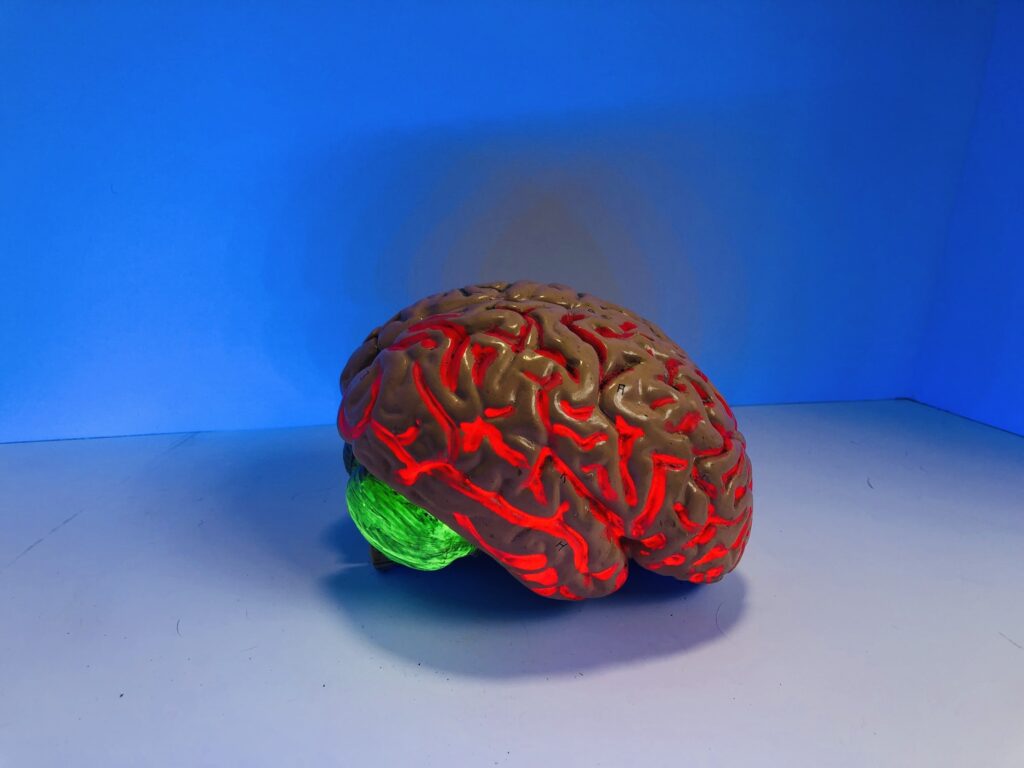
They go on to assert that modern Christianity is largely a left-brained effort. The left brain handles things like conscious thought, speech, strategies, problem solving, logic, and stories.
However, neuroscience has revealed that the right brain is larger, faster, and more powerful. The right brain handles things like individual and group identity, emotional attachment to others, how we assess our surroundings, and relational attachments.[8]
And then the zinger.
They write, “…our right brain governs the whole range of relational life: who we love, our emotional reactions to our surroundings, our ability to calm ourselves, and our identity, both as individuals and as a community. The right side manages our strongest relational connections (both to people and to God) and our experience of emotional connectedness to others. And character formation…Character formation, which is a primary responsibility of the church, is governed by the right brain, not the left brain.”[9]
What? Things like individual and group identity, community, emotional attachment and attunement, vulnerability… do these things drive our spiritual formation more than thoughts, speech, and rational logic?
They continue, “…our right brain depends on relational input to form our character. Much of the processing is nonverbal and preconscious.”[10]
Thus, the title of their book is The Other Half of Church. They aren’t arguing that teaching, Bible studies, doctrine, worship experiences, apologetics, and preaching are bad. They’re saying that, as a means of spiritual formation, those things are dramatically incomplete. Christian communities should be “whole-brained.” We are discipled as a whole person, in this case, both sides of the brain.
Let’s Summarize
Lots to chew on here. Let’s summarize this so far:
- The core of who we are is our heart or our spirit. Our roots, our bedrock. And our hearts are formed, either towards darkness or light, through time. Though we may be quickly introduced to new relationships, whether it be God or other people, the process of relational formation is usually a long-term journey. The heart may break quickly, but it doesn’t heal nearly as fast as it breaks. Apparently, we aren’t created for rapid heart formation, and so it isn’t good for us to expect it or to try to achieve it.
- To varying degrees, we all have broken hearts. We all suffer; we all experience brokenness and trauma. And God delights in restoring our hearts. He pursues us to that end, though it’s rarely on our timeline.
Entering into our suffering with God and trusted friends is a primary aspect of discipleship, regardless of the amount of trauma. Knowing ourselves, understanding our story, is a crucial part of our spiritual formation. God weaves our stories into His as His Son continues to increase His Kingdom primarily through us.
- Neuroscience has revealed that character formation, spiritual formation, and discipleship are primarily centered in the right side of the brain. That’s our relational side. It’s our group and individual identity, it’s our relationship attachment, in this case to God, others, ourselves, and creation.
Therefore, being formed into the likeness of Jesus must include teaching, doctrine, and instruction, but is incomplete if we’re not also in deep, abiding, intimate, vulnerable, long-term relationships with Jesus and others who are on the same, intentional, purposeful journey. And with ourselves.
You may have never heard discipleship described like this before. And it begins to raise some tense questions.
Do Our Churches Really Make Disciples?
Are our churches the communities we go to…to be formed? Are our churches, specifically, individually, and personally, guiding us to be more like Jesus as we get to know Him and our own stories?
Is our church a left-brained church or a whole-brained church?
Does our church understand human anthropology? Is it a community that understands that your heart is carefully and gently formed through attachment, relationship, group identity, engagement, time, and not just the accumulation of facts and head knowledge or even worshipful experiences?
Does your church invest time, energy, and resources in discipling… you?
If your church is more about general teaching, evangelism, service, and growing as an institution, you’re in the company of the vast majority of Christians. Those are all great things. But there’s obviously an enormous gap. A Formation Gap.
So, if our churches aren’t cultures of intentional formation, where do we go for discipleship?
Look, I’m with you. Our church is a fine church. Solid preaching, mission trips, volunteer opportunities, great worship time, and several very important care programs.
However, I don’t expect to be discipled there, because church leadership has made it clear it doesn’t happen there. The senior pastor has said from the pulpit that he views the church’s primary mission as evangelism. Discipleship, if it happens at all, is basically self-directed.
There’s a small group effort, but like most small group programs, they meet primarily for fellowship and some Bible study, but not for intentional, time-consuming, heart-exploring spiritual formation.
The church does not expect to make disciples. They hope to make converts and then assume that discipleship (as they understand it) will happen through osmosis and programs. I’m not picking on our church. I think this is what the vast majority of Christians experience.
I’ve been following Jesus for decades, but I have yet to find a church institution that’s focused on individual, personal, intentional spiritual formation. A church that sees its primary mission as forming its members into people who think, act, and love like Jesus.
I’m not saying that type of church institution doesn’t exist; I just haven’t found examples.
Lots more to dig into in our first Key Element of Formation! We’re going to take our time exploring time (see what I did there?).
[1]Van Der Kolk, B. (2014). The Body Keeps the Score: Brain, Mind, and Body in the Healing of Trauma (p. 1). Penguin Books.
[2] https://journeypureriver.com/big-t-little-t-trauma/#:~:text=Little%20%E2%80%9Ct%E2%80%9D%20traumas%20are%20highly,and%20loss%20of%20significant%20relationships.
[3] Van Der Kolk. The Body Keeps the Score, p 26-27. Penguin Books.
[4] Van Der Kolk. The Body Keeps the Score, p 208. Penguin Books
[5] Frankl, V (1992). Man’s Search for Meaning (p. 55). Beacon Press.
[6] Thompson, C. (2021). The Soul of Desire: Discovering the Neuroscience of Longing, Beauty, and Community (p. 11). InterVarsity Press.
[7] Wilder, J. & Hendrick, M. (2020). The Other Half of Church: Christian Community, Brain Science, and Overcoming Spiritual Stagnation (p. 14). Moody Publishers.
[8] Wilder & Hendricks. The Other Half of Church (p. 20-21). Moody.
[9] Wilder & Hendricks. The Other Half of Church, p. 22. Moody.
[10] Wilder & Hendricks. The Other Half of Church, p. 28. Moody.