
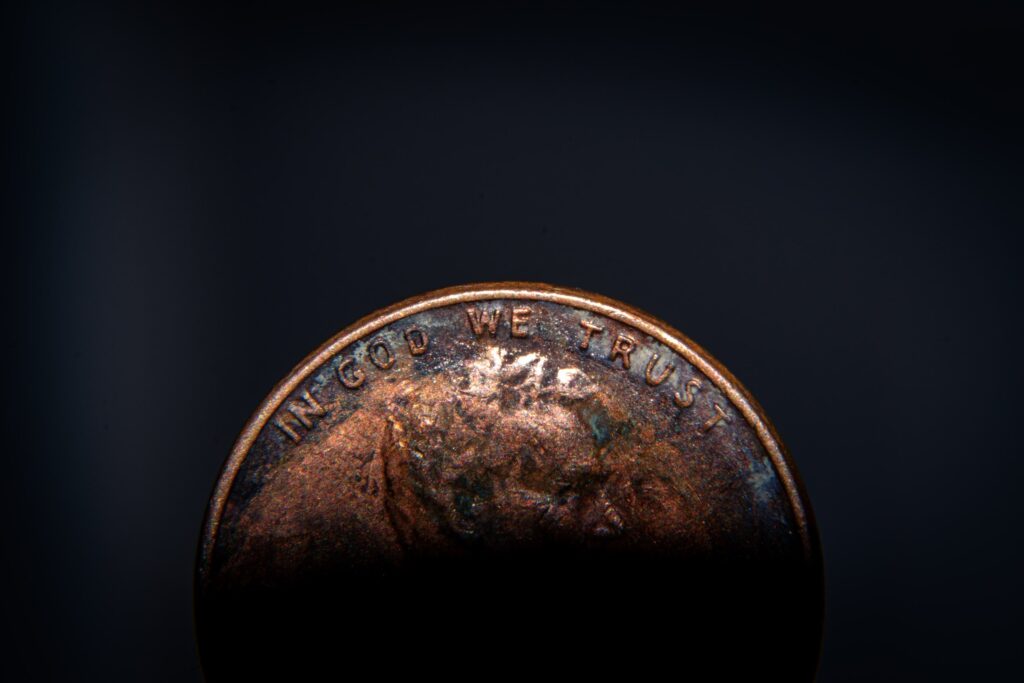





Heartview Indicator #8: Money!
How we view and use money provides us with fantastic insights into the ideas and desires in our hearts. Back when Brian was in the financial services industry, he realized he could group people into two primary categories when it comes to money: Wardens and Wingers. Wardens treat money as their prisoner and Wingers…well…wing it!
But are there deeper reasons why people treat money the way they do? Let’s continue our exploration of the human heart as we uncover the bedrock reasons why money is such a powerful influence on us – and also how it’s such a powerful indicator of the condition of our spirits.
This episode is part of Season 2.
Click here for the Season Overview.
TRANSCRIPTION
Ep 23: Money as a Spiritual Indicator
Money! Cash, currency, coin, bucks, change, Benjamin’s, biscuits, scratch, moola, loot, dough!
Money has been at the center of debate, discussion, romance, marriage, divorce, good health, bad health, prosperity, poverty, peace, war, virtue, and vice since the beginning of time. Is there anything so fundamental (and so controversial) to human life and existence as money?
The Bible certainly has a lot to say about money. Some 500 Bible verses mention prayer. There are over 2,000 verses that refer to money.
We’ve arrived at the eighth and final Heartview Indicator! And boy, we can tell a whole lot about what’s going on in our hearts by how we use and view money.
A Quick Review
Let’s do a quick review. This podcast and the organization, Soil and Roots, are all about journeying together into deep discipleship, and we’ve explored what it means from a few different angles. It’s another term for part of our journey of spiritual formation. If there are six stages, we might consider deep discipleship as primarily exploring the last three of those stages: the journey inward, the journey outward, and living a life of love.
However, we’ve approached deep discipleship from a somewhat unorthodox perspective, that the formation of our hearts means the transformation of certain ideas that sit deep inside us. We define ideas as “fundamental concepts, assumptions, and principles in which our hearts are rooted, but of which we are typically unaware.”
That ties into the title of Soil of Roots. Our roots are our hearts, and they are planted in soil – the ideas that feed and mold our roots.
Our ideas are intertwined with our desires. As human beings, we’re primarily lovers. We’re primarily creatures of desire. We are formed by what we love.
We’re born with longings. Our deepest longing is to be known, to be pursued. We desire to be loved. We desire to love in return. And our desires are highly influenced by and fused with these generally unconscious ideas.
Theologian Dallas Willard wrote, “Ideas are so essential to how we approach life that we often do not understand when and how ideas are at work… (People) don’t know what moves them, but ideas govern them and have their consequences anyway.”[1]
There are two sets of ideas, those from the kingdom of darkness and those from the kingdom of light. Ideas of light are original. They are good. They are pure.
Ideas of darkness are corrupted ideas of light. There are no original ideas of darkness. All dark ideas are essentially twisted bastardizations of good ideas. You can’t have evil without good, and evil can’t create; it can’t originate; it can only distort.
Ideas of light lead to beauty, goodness, and flourishing. Ideas of darkness are designed to kill us.
A powerful way of looking at discipleship (or spiritual formation) is progressively replacing ideas of darkness with ideas of light. Jesus is the embodiment of ideas of light, so the more our hearts embrace His ideas, the more like Him we become. That’s the point.
Some ideas are more fundamental than others. We call these the Six Core Ideas. One of them is the Idea of Identity. Who am I?
Who Am I?
How our hearts answer the question, “Who am I?” is central to how we process and interact with the world around us.
If you’re a Christian, you most likely have a set of beliefs about who you are. You are a child of God. You are a son or daughter of the King. You are a brother or sister of Jesus Christ. You are a unique, amazing, extraordinary creature hand-crafted by a loving Creator.
That’s our belief. But that may not be our unconscious idea. Ideas tend to sit way down on the bedrock of our hearts, even underneath our beliefs, at least as we define the word “belief” today.
Here’s an example of how this works. Let’s say you’re like me and you struggle with a performance-based approach to life and relationships. I’ve been a Christian since I was six years old, so I know all the right things to say as a Christian. If someone had asked me if my identity was in Christ, I would have assured them it was.
But my heart tends to embrace an Idea of Identity that contradicts my stated beliefs. As I got older, God slowly and gently uncovered this dark idea that I was trying to find my identity in other people. That meant I needed to perform to earn their approval, trust, friendship, or whatever. My unconscious inclination was to find my identity in other people’s approval of my performance.
There is a boatload of problems with that Idea of Identity.
For a good portion of my life, I wasn’t conscious of this idea of darkness. I was just working hard, being a good, diligent Christian, quoting Colossians 3:23, and meditating on the Parable of the Talents. And working hard to perform in every area of life: in my family, at work, in my hobbies, in service. And yes, I was trying to perform for Jesus. Isn’t that ironic?
Does this mean I wasn’t a Christian? No, I’ve been following Jesus since I was a kid. But we all follow Jesus at different paces. Sometimes we follow Him closely, and sometimes we fall behind. The good news is that He waits for us, coaches us, falls back to be with us, and sometimes just stops and sits with us when we’re stuck on the road.
It does mean that we are really complicated creatures, and we all have a mixture of dark and light ideas and desires in our hearts. And it’s hard, painstaking work to explore and uncover them.
Most people don’t know ideas exist, and if they do, most don’t explore them. It’s legitimately easier to just go about life and set up coping mechanisms and barriers than it is to contemplate this stuff. Most of us just keep ourselves insanely busy so we don’t have time to dig this deep, even if we’re busy with really good things.
Am I cured of my performance-based idea of identity? No, it’s a process. Some days I bend toward the kingdom of light, and some days I don’t. But I now know it’s there, I know why it’s there, and I recognize the indicators when they show up. I now know what patterns to look for in my thoughts, emotions, behaviors, and relationships.
Ideas of darkness can take years to unwind and replace. That’s why it’s so important we take this journey together. We really do need each other. Deep discipleship is best taken as a community.
Heartview
Season 2 has been all about the primary problem of the Discipleship Dilemma. It involves this concept of “double knowledge.” Our capacity to know Jesus better is interconnected with our willingness to know ourselves better. Knowing our hearts is tricky business, but essential to deep discipleship, to our spiritual formation. Knowing our hearts means we courageously explore the hidden ideas that power and govern us. But because we live in an era that tends to ignore or downplay our stories related to our discipleship, we find ourselves in a dilemma.
And even though we typically aren’t conscious of light and dark ideas in our hearts, our hearts communicate them anyway. God has ingeniously wired us with these Indicators that reveal hidden mysteries.
The process by which we explore our ideas and desires using these Indicators is what I’ve somewhat lamely termed… Heartview.
Heartview is not something we do on our own. We must involve trusted friends, perhaps a spouse or someone else who legitimately seeks your goodness. And we need God.
When we talk about inviting God to help us explore our hearts through this Heartview process, just remember: He’s already there. He’s been there, waiting patiently for us to join Him.
Your Eight Heartview Indicators are your thoughts, emotions, health, relationships, behaviors, words, time, and money. You can see this represented as a picture on the website. Check out the Heartview image on the Resources tab at soilandroots.org.
I don’t have professional experience with all Eight Indicators. I’m not a healthcare worker, for example, even though we touched on the indicators of physical, emotional, and mental health.
Money, money, money
But in my early career, I was a financial professional. Years ago, I worked in the financial services industry and became what’s known as a CFP®, a Certified Financial Planner®. A CFP® works with families on all sorts of financial issues like investments, insurance, estate planning, and taxation.
I haven’t practiced financial planning in years, but I still complete my 30 hours of continuing education credit every 2 years and pay my annual fee to keep my initials. I can’t seem to let them go. It was just too much work to get them.
Anyhow, when I was in the investment world, I also became certified in a course on biblical stewardship, how to use money according to the principles found in Scripture.
I would hold workshops on building a family budget, and I worked with families one-on-one to help them craft a financial plan tailored to their situation. Think of Dave Ramsey before he became the de facto Christian money guru.
I was pretty young in my career when I started hosting budgeting workshops, and I was sure my education and brilliance would lead family after family to financial freedom through my wisdom and experience crafting God-honoring budgeting plans.
But about a year or two into teaching biblical financial principles, I came to a humbling realization. The majority of people who took my classes either never used the budget they had just successfully built, or they tried it for a month or two and then quit.
I don’t know if Dave Ramsey collects data on this, but I would be interested in the percentage of people who buy his books and take his Financial Peace University course who are still on their budgets a year or two later. Based on his website, he seems to have had much more success than I did.
I came away from the experience teaching a lot of couples how to honor God with their finances, wondering if I was just exemplifying the adage, “You can lead a horse to water, but you can’t make him drink.”
It was the same feeling I had when I sat in a real estate investing course one time, only to discover that the vast majority of people who pay for the education to become real estate investors never actually buy any properties.
We love to collect information, but that doesn’t mean we love to be formed. Just knowing the truth doesn’t mean that truth will form our hearts.
At the same time, I had a small book of financial planning clients. As I learned more about the folks I worked with and taught, I realized I could split people into two basic groups when it came to money matters. I called them “wardens” and “wingers.”
Warden and Wingers
A warden is someone who clings tightly to money. Money is their prisoner. They love to get it and save it, but they’re reluctant to spend it. They live in fear of losing it, either now or in the future, so they watch it closely, invest it wisely but conservatively, and get pretty anxious when the market doesn’t go their way, or they have a large, unexpected expense.
The amount of money a warden makes isn’t the issue. It’s the way they treat the money they make. Tightwads, frugal, penny-pinchers, these are all terms to describe wardens.
Wardens can be generous, but they’re typically very concerned with the ROI of their charitable giving and tend to find lots of excuses not to give generously. They resonate with Bible verses about thriftiness and diversification.
Ecclesiastes says, “Divide your portion to seven, or even to eight, for you do not know what misfortune may occur on the earth.” (Ecc. 11:2) They can be mistrustful of friends and relatives who may appear to be trying to take advantage of them. Wardens not only treat money as their prisoner, but they can also create a prison for themselves.
And then there are the wingers. They wing it. If they want something, they buy it. If they can’t afford it, they buy it anyway. They wield silver crosses and cloves of garlic if you mention the word “budget,” and they generally live paycheck to paycheck. And this doesn’t have to do with the amount of money they make.
Wingers can be very generous, even to a fault. They tend to heavily spiritualize their giving. God tells them to give sacrificially… even if they’re hocked in credit card debt. They believe in “living by faith,” which to a winger means they don’t or can’t control their spending and expect God to reward them with provision anyhow because they are so faithful.
When they overspend or overgive, and they survive the next month, they credit God for honoring their faithfulness.
They tend to give as freely as they spend…without much responsibility or thought. A winger steers clear of Bible verses about discipline, delayed gratification, and stewardship, and they focus on verses about God’s grace, His overflowing abundance, and His lavish love for us.
Mars and Venus; Wardens and Wingers
And for some reason, wardens and wingers tend to marry each other.
Jessica and I joke that, as good Christians, we’ve never fought. Instead, we have “intense moments of fellowship.” When wardens and wingers marry each other, they become very well acquainted with frequent, long, and painful “intense moments of fellowship.”
On the extreme ends of these two types of people, we see some deeply harmful dysfunction. A warden can become a hoarder, plagued by anxiety, fear, and suspicion. A winger can turn into a gambler, an irresponsible entrepreneur, or someone who exhibits very high-risk behaviors.
But most of the time, wardens and wingers look like everyday Christians, even though deep down in their hearts they’re struggling with pretty common dark ideas and desires.
Not everyone is a full-blown warden or a winger, of course, but most of us tend in one direction or the other. If you’re not sure, just ask your spouse or a close friend! There’s a high probability they will quickly tell you whether you treat money like your prisoner or your liberation.
So, what do these tendencies tell us about the hidden ideas in our hearts?
Money as a Heartview Indicator: Warden
As we’ll talk about in the next episode, we live in an age that isn’t just a war of competing, comprehensive worldviews. It’s a war of unconscious ideas, ideas like identity and power and purpose. And money offers an incredible incentive to embrace ideas of darkness because of the power and security it represents.
And, ironically, the warden and the winger both struggle with similar dark ideas, even though how they treat money ends up looking differently.
It’s not wrong to have a lot of money, and many Westerners do. But, as with everything we explore on Soil and Roots, we need to carefully examine what we really desire and what we truly love.
Back in the day, I counseled several wardens and wingers. Here’s how this plays out.
To the warden, money represents control, security, and power. And like most people, the warden desires those things. Why does the warden desire control, security, and power? Because those things have been taken from them at some point in their lives.
It’s not necessarily that money has been stolen from them, but other things have been stolen from them. Their value, their purpose, their identity. In many cases, their deepest desire to be known, to be seen, to be wanted by someone…that desire went unfulfilled. Or they were abandoned or betrayed at some point.
Someone who longs to be known and is instead rejected becomes understandably angry. That doesn’t mean they rant and rave around the house. It means they yearn for control. Their heart doesn’t want to keep hurting, so to protect itself, it seeks things it can control. A warden unconsciously assumes that by controlling something – anything – she can keep herself from harm.
Controlling behavior is almost always associated with anger and rage and it shows up in money habits all the time. Why?
Mo’ Money, Mo’ Problems
Because money is an incredibly accessible, easy-to-control, powerful thing. We all know what it represents, especially in Christian communities. Money supposedly means God has blessed you. If you’re financially successful, people look up to you. They give you respect and honor. If you’re wealthy, you’re invited to corporate boards and church governing bodies. You are asked to speak and to give advice. It’s assumed you must be wise since you are so good at business and have made so much money.
It’s ironic how Christians tend to honor and esteem wealthy people, considering Jesus was clear that it’s pretty hard for wealthy people to enter the Kingdom of Heaven – the whole camel through the eye of the needle thing.
And the wisest man who ever walked the earth spent His three years in ministry as a pauper and died penniless.
The second wisest man, Solomon, was ridiculously wealthy. Where did that get him? A whole lot of trouble. All that money and power ruined him and resulted in the nation of Israel splitting not too long after it was finally unified.
In my experience with corporations and non-profits, most wealthy board members aren’t there because of their wisdom (which they may or may not have). They’re there because the organization wants more of their money.
But it’s been this way throughout human history, and our hearts know it. We desire to be accepted, to be secure, to be known. Those are good desires.
But instead of the heart of the warden seeking its acceptance and security in God, it finds its desires met in money. And here’s the really hard truth: a warden unconsciously seeks the power and control that money supposedly represents because she just can’t trust God fully.
Why? Because her heart was formed around the idea that God can’t be trusted.
Sound familiar? See Genesis chapter 3.
A warden is wounded. Her mind and mouth will say all of the normal, accepted Christian things, but her distrust of God and her tentativeness to give up control to Him comes out in the way she views and handles money. Because her heart is scared to give itself fully to God, she instead takes control so that she feels safe, in control, and secure.
I think we can all understand her heart to some degree. It’s hard to trust God when people we depended on to know us, to really know us, refused to do so, or used us for selfish purposes.
She lives with dark ideas. And those dark ideas are slowly killing her and hurting her loved ones. In the vast majority of cases, she is not responsible for her wounded heart. But she is responsible for how her wounds wound others. Hurting people hurt people.
The warden thinks the winger is nuts, at least after they’ve gotten to know each other.
When I’ve seen these two get married, the initial story goes like this. The winger comes across as carefree, fun, romantic, and adventurous. To the warden, this is a breath of fresh air. The winger seems so secure. The warden longs for the freedom and relaxation the winger seems to enjoy all the time. The winger is attracted to the warden because of the responsibility and structure they represent.
It’s all very cute and romantic until they get married. The warden quickly concludes that the winger is not carefree and secure. They are irresponsible and theatrical. The winger isn’t free from anxiety. He is just deflecting his anxiety and refusing to deal with it.
The prison the warden constructs becomes very real to the winger very quickly. Why can’t we just enjoy life? Money is a gift from God. Let’s enjoy His blessings! The winger feels constricted, ignored, and hemmed in. What he thought was security was just a set of walls around his carefree personality.
Money as a Heartview Indicator: Winger
The winger is also wounded. But instead of seeking to control money and use it as a security blanket, the winger simply ignores money problems and acts as if it will all work out. Where the warden is a pro at delayed gratification, the winger gratifies himself immediately because -and here’s the point – he deserves it.
He deserves what? He deserves what was stolen from him. He has wounds similar to the warden’s: a loss of identity, value, power, purpose, and love. His heart also desires to be known, but that desire was corrupted or abandoned somewhere in his story. And his heart is understandably angry. You rarely see it in the speech or emotions of a winger, but it comes out in the way he treats money.
He pays the restaurant bill even when he can’t afford it. He wants to be seen as generous. If he wants a new toy, he buys it. It’s not really about the toy. It’s about the ideas it represents. He’s easily frustrated when his friends have things he can’t have, so he buys them because – well- he deserves it. He’s had a tough day, or a tough month, or a tough life.
He’ll often use his wife or his kids as justification for his spending. He believes his kids deserve the same things other kids have or things he didn’t have as a kid. So, he spends the money and will figure out how to pay for everything down the road.
A winger is angry, even enraged, and generally doesn’t know it. And so, he uses money to soothe his anger by trying to fulfill unmet or broken very deep desires.
Wardens and wingers seem like opposites, but they’re not. They share similar wounds and the same consequence. They both use money to fulfill their bedrock desires and soothe their pain. One does it by controlling money, and the other does it by letting the money control them.
And both of their hearts struggle to trust God because their hearts believe God has let them down. That He can’t be trusted.
Will they share that in a small group or Bible study? Maybe. But most of the wardens and wingers I worked with had no conscious idea they were wounded. They thought a good budget or a financial plan would cure their money challenges.
That’s like treating a heart disease with a Band-Aid.
This is what makes Jesus’ closing comments in Matthew 6 so challenging: “Seek first the Kingdom of God and all these things will be added to you.”
By “all these things,” He means the items he referenced earlier in the chapter: food, drink, and clothing. The necessities of life that money secures for us.
This is hard to do. It’s easy to quote and easy to preach, it’s even easy to sing, but it’s really difficult for most of us to do.
Remember our three-step Heartview process back in Episode 14: Uncover, Determine, Immerse.
- Use our Heartview Indicators to uncover the hidden ideas in our hearts
- Determine whether the ideas are light or dark
- Immerse ourselves in cultures intentionally designed to transform dark ideas into light
We all have some warden and winger tendencies in the way we handle money. We all use money to soothe ourselves. Whether it’s retail therapy or checking our investment balance every day to make sure it’s going up. The reason Jesus talked about money so often is that it’s such an easy substitute for Him.
But if, through our talks with God and trusted friends, we discover that we are wardens or wingers more often than not, what do we do?
Heart Formation for a Warden or Winger
We courageously explore our soil and roots, our hearts and the deeply embedded ideas that form them.
That requires understanding your story. If our deepest desire is to be known (to be accepted and loved and to know that someone will be there for us, for someone to be attuned to us), at what point in your story was that desire broken, abandoned, or damaged by someone who was supposed to care for and mold your heart towards health and wholeness?
Maybe it was a parent or caregiver. Maybe a brother or sister. Maybe a mentor, friend, or spouse. Maybe your heart was malformed decades ago, or maybe it’s going on right now.
Uncover: Be with God and trusted friends to help you understand your story.
Determine: If you conclude you’re a warden or a winger, which Core Ideas are dark? Despite repeating all of the appropriate Bible verses, does your heart struggle to accept that you truly are a son or daughter of God because you transpose your very valid earthly experience onto your heavenly Father? We do this all the time.
Naming the dark ideas is essential, and it takes a lot of time and conversation to unpack them.
And that’s why Immerse is step three. We need a community around us to treat us in ways that transform our bad ideas.
I have certainly witnessed wardens and wingers change their money habits. I’ve seen wardens loosen up. They remain responsible, savvy investors and stewards of their money. But they don’t depend on their money to soothe their anger and their pain. Money is their tool, not their prisoner.
I’ve seen wingers adapt to budgets, adopt responsible money management, and experience the joy of doing so! Not because of a course or a training program but because of a healed heart. Money is their tool, not their liberator.
Let’s just remember that money is the indicator, not the problem. The process of uncovering ideas, determining whether they are like or dark, and replacing dark ideas with light – what we call discipleship – is a journey of time, intimacy, habit, community, and instruction.
It doesn’t happen overnight, and it doesn’t happen because of a one-time experience. It happens through immersion in a community designed to remold and remake our hearts into images of light. Instruction is part of it, but it isn’t nearly the entire journey.
We can learn a whole lot about our hearts by exploring how we view and use money. So, what are you? Are you a warden or a winger?
If so, how might God be inviting you into a place where He will gently heal your wounds and bring you to a place where money is simply what it is – a tool, a gift from God to be stewarded, a blessing to enjoy, and a means of growing His Kingdom? His Kingdom that he invites us to seek first above everything else for our benefit, and for the benefit of the world around us.
[1] Willard, D. (2012). Renovation of the Heart (p. 97). NavPress.