


As we journey into deep discipleship, we continue to “practice” identifying and exploring the ideas that form us. Today, we dig into an “Idea of Expectation.”
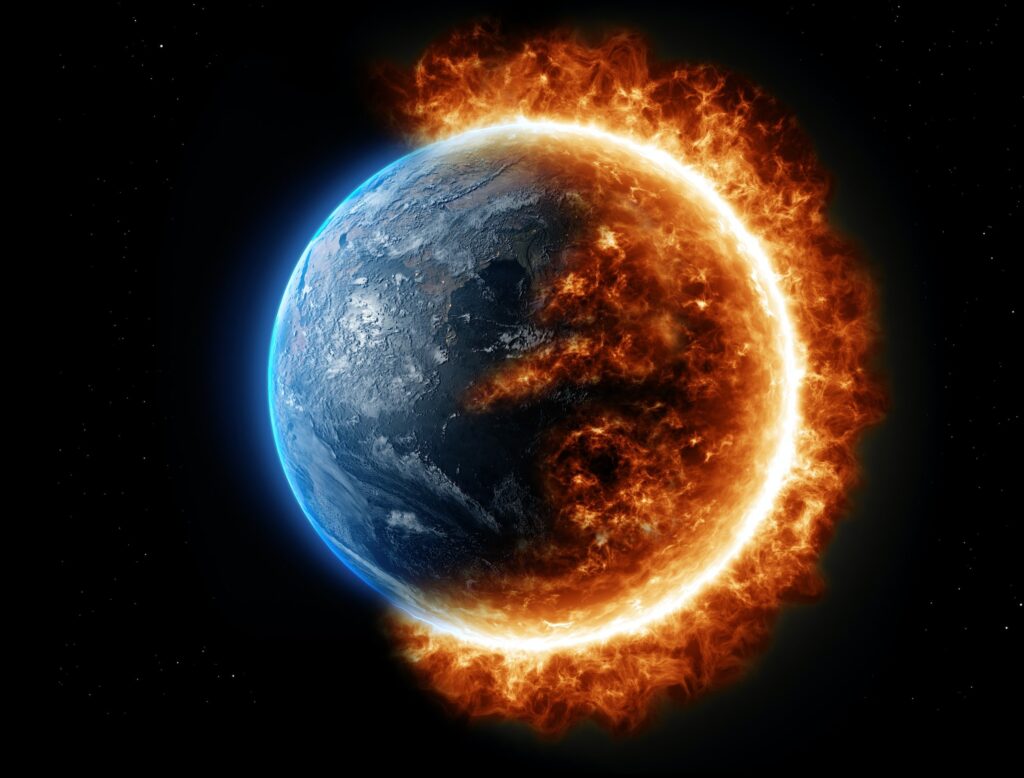
Is the world winding up or down? Are we headed towards a worldwide crisis, or are there other ideas to consider?
Whether we know it or not, we have conscious or unconscious assumptions about the direction of the world and the Kingdom, and these ideas have tremendous influence on our thoughts, emotions, behaviors, and relationships. We explore one popular idea called “Christian fatalism,” and how it relates to the Gospel of the Kingdom and the Christian church in the West. If you haven’t already, check out the Creation Picture for reference at www.soilandroots.org.
TRANSCRIPT
Ep 4: It’s the End of the World as We Know it (The Gospel of the Kingdom)
Intro: Welcome to the Soil and Roots podcast: digging beneath the surface to uncover the hidden ideas that shape and define us, the church, and the culture. I’m Brian Fisher.
This is Episode 4: It’s the End of the World as We Know It
The Soil and Roots podcast is a slow, systematic journey into what we call “deep discipleship.” Deep discipleship happens when we explore the unconscious, powerful ideas that sit at the bedrock of our hearts. This journey dives beneath our surface answers, controlled emotions, and even our intellectual belief statements. We typically don’t take this journey unless we’re in crisis, but we don’t have to be in crisis to start digging.
We find ideas from two kingdoms: The Kingdom of Darkness and the Kingdom of Light. We’re defining discipleship – this journey to become more like Jesus – as the progressive transformation of dark ideas into light ideas.
I know, this sounds a bit odd. We don’t find the word “ideas” in the Bible like this. However, once we begin exploring ideas, we see them everywhere in life and in Scripture. And we discover that Jesus devotes an enormous amount of effort to confronting and replacing dark ideas with light ones.
Soil and Roots is a progressive journey, so I encourage you to listen to or read the episodes in order at your own pace. Folks jump in and out, and that’s fine, but they may hear terms and phrases that aren’t familiar.
The purpose of this first season is to just get our arms and hearts around the concept of ideas, and to begin to imagine a disciple as someone who routinely digs beneath the surface to explore them.
We’ve briefly mined one idea so far – an idea of the Gospel.
Today we’re going to practice “digging for ideas” again, this time about an Idea of Expectation.
Set the Stage
Let’s review our definitions so far: a disciple is an apprentice of Jesus for the purpose of becoming more like Him: to do what He does, to love as He loves, to desire what He desires. We become more like Jesus by experiencing Him, and that means the dark ideas in our hearts are being transformed into light ideas.
An Idea is a fundamental concept, assumption, and principle in which our hearts are rooted and of which we’re generally unaware. Yet ideas have a profound impact on our relationship with God, ourselves, others, and the world around us. Ideas aren’t so much intellectual conclusions as they are experienced realities.
In the beginning, God placed Adam (whose name means “human”) and Eve (whose name means “life) into four relationships: with Him, others, ourselves, and with creation and culture.
All four were broken when Adam and Eve decided to become gods themselves, and, as we explored in the last episode, all four are being reconciled by Christ in His Kingdom.
We noted that, although the Kingdom of God is a predominant theme in all Scripture and is expressly taught in the New Testament, many Christians today struggle to define the Kingdom or to understand its relevance.
Last episode, we were reminded that this “forgotten” Kingdom is growing. And it can’t be stopped.
Yet because we aren’t quite sure what the Kingdom is or how it affects our reality, we get a little fuzzy about the past, present, and future. This impacts all sorts of our ideas, including what the future might hold.
A Critical Question
A while back, my wife and I had some friends over, and I posed a series of questions related to Christianity, the Kingdom, and the Christian life. Near the end of the discussion, I asked:
“Is the world winding up or is it winding down?” Meaning, in their view, is the world improving overall for the benefit of mankind, or is the world descending into greater evil to the detriment of mankind? Not an easy question.
One smart young lady responded by asking, “Do you mean the church, or do you mean nations and culture in general?”
Before I could respond, she answered he own question. “I think it’s both. I think the church is increasing and winding up while the world itself is declining and winding down.”
Most of the group agreed with her. They concluded that the number of people following Jesus is expanding, while the rest of the world system is decaying, and that this decay is resulting in greater evil and the collapse of portions of society worldwide.
This question is intended to help uncover an often-hidden idea about what we expect – not only of the future, but of what the Kingdom is and its impact, or lack of impact, on the world.
Our Expectations Impact Everything
Whether we’re conscious of it or not, we’re primarily creatures of desire, and our hearts have desires rooted in expectations.
We have expectations about all sorts of things – how we will parent, what our marriages will look like, what my dinner will taste like, how long we’ll live, the amount of joy or suffering or happiness or pain we may experience.
And we have ideas of expectation about where the world is heading.
Most Christians have at least a vague notion that, at the end of what we currently understand as history, Christ will wrap everything up and those who follow Him will enjoy some sort of paradise for eternity.
So, as a Christian, we might consider this question: “What will be the condition of the world just before Christ consummates the Kingdom at the end of this age?”
How we answer that question, or perhaps our assumption about that answer, actually has an enormous impact on how we see the world and operate in it.
A Tale of Two Ideas
In general, Christians fall into one of two camps regarding this Idea of Expectation.
The first idea is that the world is hopelessly corrupt and falling into greater evil and will eventually experience some sort of cataclysmic end prior to when Jesus consummates His Kingdom – the end of this age and the beginning of the next.
Perhaps it’s a total annihilation like Alderaan’s fate in Star Wars: A New Hope, or perhaps it’s worldwide economic collapse, famine, wars, and extraordinary suffering.
Of this group, some believe Christ will rescue His followers before things get really bad. Others believe His followers will suffer through it like everyone else.
Obviously, not everyone has a fully vetted view of how things may end up. Sometimes we just operate on the assumption that things aren’t going well and will only get worse.
It’s worth noting that this view has permeated other mountains of culture aside from parts of the church. Hollywood has produced all sorts of worldwide destructive storylines, everything from AI taking over the world in the Terminator movies to climate change destruction in The Day After. For whatever reason, we enjoy exploring catastrophic scenarios from Mad Max to multiverses, from zombie apocalypses to alien invasions, from worldwide pandemics to nuclear winter.
I think it’s fair to say our media entertainment has impacted our ideas of expectation, regardless of how we might view the Bible.
My guess is that the young lady who answered “both” when I asked whether things are headed up or down actually represents the majority view in the hearts of Christians in the West.
The kingdom of darkness is powerful, and the world’s systems are slowly going to hell. However, the church is growing, evangelism is working, souls are being saved, and the number of Christians around the world is increasing.
Do we recognize this Idea of Expectation? Probably.
The Partial Hope of the Gospel
Let’s go back to our Creation Picture, our nature scene from Episode 1.
We’ve noted that God placed man into four relationships in the garden. All four were broken because of sin. Christ came to reconcile all four relationships in His Kingdom.
These four relationships are manifested, lived in, and intertwined with the circle and the seven mountains of culture: family, church, education, business, government, media, and arts and entertainment. We are integrated people living in an integrated world. Each of us interacts with God, others, ourselves, creation, and all seven mountains all the time, whether we’re aware of it or not.
If the current, popular idea of expectation is that the church is winding up, but the world is winding down, what do we mean? And how does the Kingdom fit into all of this?
It seems to mean that Jesus is primarily restoring one of our four relationships (we’re reconciled to God) and growing one of the seven mountains (the church).
Though we may not have a clear vision of “if” or “how” Jesus is restoring our relationships with others and ourselves. And we may not expect Him to have any meaningful impact on the other six mountains of culture.
In effect, we should expect marriages to continue to struggle and decline, addictions and self-harming problems to increase, and strife to continue between people in general.
In terms of the cultural mountains, Jesus is effective at growing the church mountain, but the other six mountains are slowly descending into greater evil, meaning the Kingdom of Darkness is successfully conquering those mountains prior to its final defeat. We don’t really expect the church mountain to have any lasting impact on the other six mountains.
So, What’s the Kingdom?
Let’s pause here. If we go back to the last episode, we noted that the Kingdom of God is comprehensive and cosmic and that it’s growing. Paul tells us that Jesus is reconciling everything. He is putting all enemies under His feet.
Then how can the world be winding up and down at the same time? How can the Kingdom of Light be saving souls and growing the church, while the Kingdom of Darkness is destroying relationships and dragging six mountains into hell?
Why is it that the Kingdom of God is effective at growing the church, but apparently impotent at redeeming and restoring the other six mountains of culture, at least in the long term?
At Soil and Roots, we call this Christian fatalism. The church is growing, but the rest of the world is heading towards an inevitable collapse.
Christian fatalism assumes that it doesn’t matter what we do, the world is descending into hell, and we need to save as many souls as we can before it sinks beneath the surface.
We need to be as effective as possible at evangelism, but attempting to bring the Kingdom of God to bear on our other three relationships and the other six mountains may have some short-term gains but are ultimately destined for failure. Christian fatalism recognizes that Christ will, in the end, reconcile all things, but believes the modern church will not prevail in most areas of society and culture.
One of These Things is Not Like the Other
Ok, you may now be feeling some tension, and you probably know where I’m heading.
Someone who holds to the Gospel of Salvation, the idea that the Gospel pertains primarily to my relationship with God, can hold to the Idea of Christian fatalism.
If the Gospel is only about the saving of souls and the growth of the church, then we can accept the rest of the world is inevitably falling apart, in some ways. It doesn’t fit perfectly, but it can fit.
However, if we hold to the Gospel of the Kingdom, we can’t logically hold to Christian fatalism at the same time. They’re contradictory ideas, and trying to hold on to both causes some real problems. We can’t say on the one hand that the Kingdom of God is cosmic and growing, and on the other claim it’s impotent and ineffective at defeating the Kingdom of Darkness in some areas of the cosmos. If we’re integrated beings living in an integrated world, how do we factor in this type of separation?
Jesus can’t be Lord of All and Lord of Some at the same time.
My Conversation with a Professor
I’m going to relay a conversation I had with a seminary professor some ten years ago about the Idea of the Kingdom and the Idea of Christian fatalism. If we listen carefully, we’ll start to see how Christian fatalism runs up against the Kingdom of God and how difficult it is to reconcile the two.
We’ll call the seminary professor Dr. Smith. Of the two groups we mentioned that hold to Christian fatalism, He believes Jesus will rescue His followers before things fall apart.
“Dr. Smith, what you are saying is that the primary purpose of the church is to share the Gospel of Salvation, evangelize the lost, save souls, and grow the church, but the rest of society is the Titanic and its sinking.”
He replied, “Yes, I believe evil will persist and grow, and Christ will come back at the second coming to rescue His church.”
I asked, “If the world is declining into madness, why then are we not taken to heaven the moment we receive Christ? Why does God leave us here? What is our purpose?”
He replied, “He primarily leaves us here to expand His church – to evangelize other people – to save souls.”
I said, “That means we shouldn’t expect the reconciliation of our relationship with God to have any meaningful impact on others apart from their salvation, or on the rest of creation and culture. A life transformed by Christ now will be ineffective in the redemption of the rest of creation, because the rest of creation is under the controlling influence of the Kingdom of Darkness.”
Dr. Smith replied, “It isn’t that we shouldn’t try to influence other relationships or culture, but that isn’t our focus. Scripture tells us that it will get much worse before it gets better. So, I guess long-term the answer is no – we won’t be effective as His church at doing much else than to evangelize and provide relief.”
I said, “I struggle with that. A life truly redeemed and restored to God – a person who is intent on becoming more like Jesus – must have a Kingdom impact on our integrated reality, right? I mean, if we’re to become more like Jesus, do we not recognize that Jesus’ impact was utterly comprehensive? What He taught and how He lived has resulted in untold blessings and reformations throughout the last 2000 years – including the seven mountains of culture.”
He said, “Perhaps. But the world will continue to descend into evil. We need to preach the Gospel and attend to those suffering as best we can as we face increasing trials and persecution. And someday, maybe soon, Christ will come back to rescue His children from it.”
I said, “Didn’t Jesus already do that? Didn’t He already rescue us? Why does He need to rescue us again? Doesn’t that suggest His first rescue mission wasn’t sufficient? What did He mean by “It is finished” when He hung on the cross?”
He replied, “He meant He has completed His work of atoning for our sins so that we could be back in the right relationship with the Father.”
I said, “But he didn’t mean the reconciliation of all things.”
Dr. Smith sat back, pondering my question. “Christ will reconcile all things in the end, but right now it is primarily His church.”
I then asked, “Dr. Smith, how bad do things need to get before Christ comes back to rescue His church…again?”
“I think we should expect things to get pretty bad.”
I said, “So the church really should focus on saving souls, but not on redeeming creation and culture. Because if we do that, if we work to overcome evil in other areas of culture, we may actually be delaying Christ’s return.”
“Yes, things have to get pretty bad before Christ returns,” he replied. “And that is a point of tension for me.”
“How so?” I asked.
“Because it makes it difficult to fulfill the Great Commandment – to love God and our neighbor as ourselves. On one hand, Scripture calls us to seek the good of everyone. That’s one way to define what it means to love our neighbor. We can’t seek their good if we sit back and allow evil to persist.”
I replied, “And yet if the world has to inevitably wind down, we have little reason to seek the restoration of creation and culture and the good of others if that means delaying Christ’s return.”
“Yes,” he replied. “It’s hard to reconcile those two things.”
Ok, so there was a lot going on in that conversation, but let me just pull out a few points on why Christian fatalism struggles to co-exist with the Gospel of the Kingdom.
1. Dr. Smith admitted that Christian fatalism means Christians may feel compelled to permit evil to persist in society, whether we think we’re going to be rescued from it or not.
We all want to see Jesus as soon as possible, so why would we resist evil if in doing so we delay His return? The dilemma is obvious. The fundamental ethic of the Christian life is love, and that includes seeking the good of others. We can’t claim we’re seeking the good of others if we stand by and allow evil in the culture to destroy hearts and minds.
Christian fatalism, in essence, pits us against ourselves and our inclination as Christians to seek out and overcome evil as an act of love. We break the Great Commandment to fulfill a fatalist view of our current period in history.
2. Christian fatalism fully recognizes that Christ will redeem all things at the end of this age. However, it considers the modern church ineffective at transforming creation and culture today. It generally doesn’t even see that as a Christian role. Christian fatalism considers evil to be a powerful force that will continue to defeat various mountains of culture until some cataclysmic period in the future. Much like ancient Israel failed in its call to be a representative of God to the nations, the modern church will fail to do the same thing.
Ultimately, we need Christ to come back in person to fix the mess we’ve been unable to fix. That’s an odd conclusion, considering Christ is already here, living among a few billion people who are following Him right now.
I’m not sure the modern church really understands the difference between Old Testament reality and New Testament reality.
Tim Keller wrote:
“The self-defeating nature of evil is depicted nowhere better than in Perelandra, the second book of C. S. Lewis’s space trilogy. The character possessed by the devil gloats over the death of the Son of God until Ransom, the Christian, asks him, essentially, “And how did that work out for you?” The demon throws back his head and howls, because he remembers that in killing Christ he defeated himself and ended death. Evil is not locked in a battle with good.… The good has already triumphed and evil everywhere recoils on itself.”[1]
Life after the cross is radically, almost incomprehensibly, different than life before the cross. Death has already been defeated, the King has already come, His Kingdom is growing and expanding, and – this is no small point – every Christian on the planet has God Himself living inside them.
3. If the Kingdom of God will ultimately be ineffective at redeeming six of the seven mountains and we’re not particularly motivated to engage them because we’ll inevitably fail, why do we celebrate and honor those who did just that?
Martin Luther King, Jr., Hannah Moore, William Wilberforce, Mother Teresa, Frederick Douglass. We consider these men and women to be heroes of the faith for their world-changing efforts to make things right – to bring restoration – in all seven mountains. This is precisely what these and countless other Christian men and women have done over the centuries. Why do we honor them if in fact their efforts are not in line with our Idea of Expectation?
Let’s close with a little Q&A.
Fish, so what? Does it really matter whether the world is winding up or down? Shouldn’t
we just live a good Christian life right now? I don’t know if I would live any differently if I knew one way or the other.
I think our Idea of the Gospel and our Ideas of Expectation have a profound impact on how we think, what we say, what we believe, and how we act.
Just consider this scenario. A Christian is sitting at home looking at the news and watching some tragedy unfold – a war, a school shooting, a human trafficking operation. That person thinks, “Well, this is a sign of the times. Come, Lord Jesus! This is terrible, but this is the way things are. I can’t wait to get to heaven to escape this.”
Another Christian is sitting at home watching the same story. She responds, “This is a terrible tragedy. I grieve for the victims involved. I wonder how Jesus will conquer this evil. I wonder how His Kingdom is even now working in hearts, minds, and institutions to prevent such a horrible event. I wonder how I might help overcome evil. Certainly, I can pray, but maybe there is something else I can do?
The first person expects evil to persist and conquer. The second expects the Kingdom of God to swallow up the darkness and sees themselves as part of the solution. It’s a vastly different expectation, and it profoundly shapes how we relate to God, ourselves, others, and the world. Rescue and relief are good – but what about restoration and recreation?
Fish, you need to watch the news. You can’t possibly believe the West is heading in the right direction. Don’t you see the problems?
I recognize the problems and agree that we’re in a profound moral and cultural decline in the West. The question is why?
Are we here because of an inevitable decay of society that is destined to decline no matter what, or might we consider that we have been preaching and teaching an incomplete Gospel for the past 100 years that encourages the church to recede into what D. James Kennedy referred to as the “stained glass ghetto?”
If the idea of the Gospel in the hearts of many Christians is solely personal, and their Idea of Expectation is that the world is collapsing no matter what we do, should we be that surprised if the rest of culture falls into darkness in our absence?
I’ll recommend two books to you if you want to see just how powerfully the church has, in fact, impacted the entire world over the last 2,000 years. D. James Kennedy and Jerry Newcombe wrote a book called What If Jesus Had Never Been Born, and Alvin Schmidt wrote a book called How Christianity Changed the World.
Fish, you’re ignoring or misinterpreting passages in Scripture that make it clear the world will decline.
Perhaps I am. Here’s what I suggest. You may never have thought about this Idea of Expectation before, and maybe you’ve discovered you’re a Christian fatalist. You believe the church is winding up and the world is heading to collapse. You may realize you go to a church that holds to the same idea, whether consciously or unconsciously.
Just be aware that there are other Ideas of Expectations right now, and they’ve been around throughout church history.
Check out some authors and books or series that present different Ideas and weigh them. To me, Christian fatalism doesn’t fit the overall narrative of the Gospel of the Kingdom – in fact, it conflicts with it. But your study may lead you to a different conclusion.
Lastly, I’ll just say this. There isn’t a single media outlet on the planet that makes money by selling you good news. None. The media understands the human heart much better than many churches do. They know what moves us and what sells. Their job is to get our eyeballs and clicks on their content. We all should understand that most of the news we consume is designed to get us to come back for more news – and so they sell us intrigue, tragedy, sadness, and scandal. We have very few, if any, outlets to hear how the Kingdom of God is growing and increasing. We receive terribly lopsided stories.
I’m not saying we aren’t facing difficult times – please understand me. But America is not the center of the universe, even though we sometimes act like it is. Jesus is the center of the universe. He is holding all things together. And whether we know it or not, His Kingdom is growing, expanding, plundering the darkness, and swallowing up evil in its light. We may not see it, we may not hear about it, and sometimes we may wonder if it happens at all. But it seems that He is constantly inviting us to participate with Him in what amounts to a cosmic clean-up operation.
If you’re in a Greenhouse, you’ll have a great time with this episode. We’re getting our feet wet exploring some powerful ideas. Next episode, we’re going to move on to another category – Ideas of Anthropology! What does it mean to be human? And what do we assume about what it means to be human! And how does that impact how we relate to the world around us?
Thanks for listening! If you’d like more information on Soil and Roots, check out the website at www.soilandroots.org. Feel free to drop us an email at fish@soilandroots.org. We’ll see you next time.
[1] Keller, T., & Keller, K. (2015). The Songs of Jesus: A Year of Daily Devotions in the Psalms (p. 115). Redeemer; Viking.