
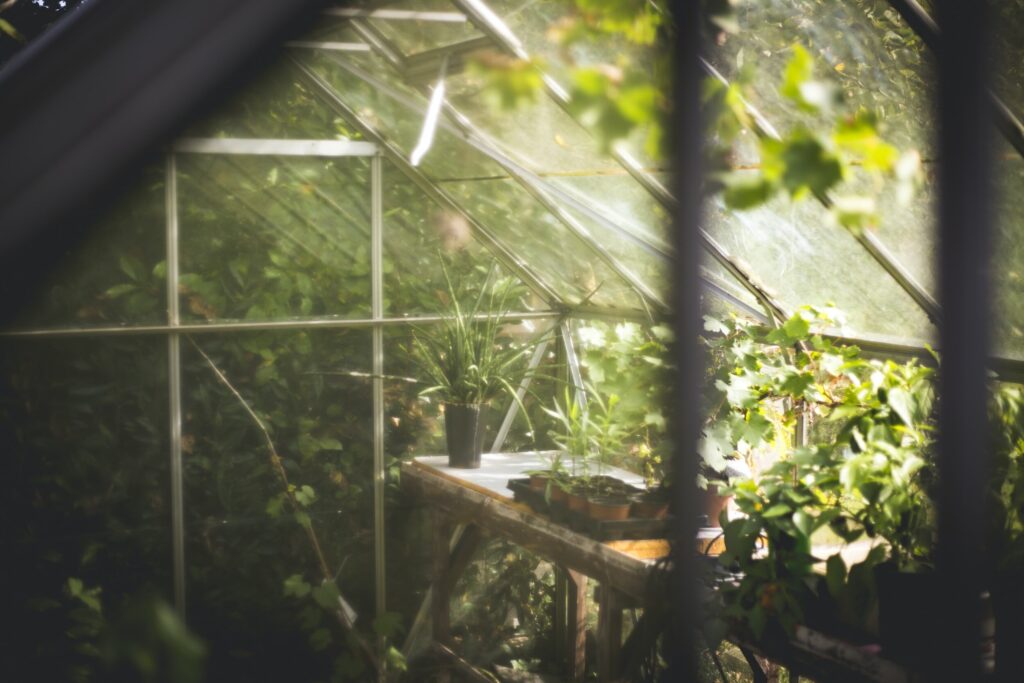




Let’s get practical! After thirty-some episodes of exploring the five elements of spiritual formation, Brian lays out how it all comes together in wonderful communities called Greenhouses. After summarizing why Greenhouses are so helpful for our formation, he shares the who, what, when, where, and how to form or join one.
There are two new visual aids that complement this episode. You can find them on the Resources tab at www.soiland.roots.org. If you’d like more info on Greenhouses, shoot us an email at fish@soilandroots.org.
This episode is part of Season 3.
Click here for the Season 3 overview.
TRANSCRIPTION
Greenhouse Discipleship Community
We’ve now wrapped up our exploration of the Third Primary Problem, the Formation Gap. And we’ve dug into all five elements of genuine discipleship: time, habit, community, intimacy, and instruction.
Today’s episode is a bit different because it’s a practical look at the communities Soil and Roots forms and supports as we grow together to become more like Jesus. We call them Greenhouses. If you’ve been listening to Season 3 and wondering how these five elements fuse together, this is the episode for you. If you’re in a Greenhouse or thinking about forming a Greenhouse, this is also for you.
We haven’t had a new visual aide in a while, so if you have a moment, head over to www.soilandroots.org, and
Season 3 Review – The Formation Gap
Season 3 stretches from episode 26 through next week’s episode, and it builds on the previous seasons. If discipleship is about character formation through the transformation of ideas, and we can discern our unconscious ideas through Heartview, what sort of environments and communities do we need to experience this spiritual change?
The best community in which to journey to become more like Jesus, to resolve this disconnection and this sense that there’s more to the Christian life, is one that intentionally embraces five key elements that are common to any human formative experience: time, habit, community, intimacy, and instruction. Soil and Roots calls these specific communities Greenhouses.
A Greenhouse is simply a way to replicate the type of communities that Jesus and the early disciples modeled. These types of communities have, in large part, been lost to Westerners over the last 150 years or so, and Soil and Roots, as an organization, seeks to restore New Testament spiritual formation by cultivating and supporting these Greenhouses.
There’s a particular personality or flavor to the Soil and Roots Greenhouses. They intentionally seek to help resolve the current Three Primary Problems in the West, all of which are based on faulty ideas that make it difficult for us to experience this deep discipleship.
The West has largely Forgotten the Kingdom. We may embrace Jesus as our personal Savior, but we have little vision for Him as King of the cosmos. Many people interested in Jesus don’t really know what the Gospel of the Kingdom means, though it’s the pervasive theme of the Bible.
Though God has placed us in four relationships (with Him, others, ourselves, and creation), modern Christianity tends to operate on the idea that Jesus came to address only one of those relationships, at least in the present. Greenhouses embrace the comprehensive nature of the Gospel of the Kingdom, which is the good news that our King has come to redeem and reconcile everything. And that redemptive work is in process, right now, in all four relationships.
Because we live in an age of hyper-rationality, at least when it’s convenient, modern Christianity has lost much of its understanding of “story.” If being a disciple means becoming more like Jesus, we not only need to know Him but also know ourselves. If we don’t embrace discipleship as the practice of exploring both the object and subject of our formation, we’ll find ourselves in a dilemma, a Discipleship Dilemma. Greenhouses encourage and embrace the exploration of our hearts and our own stories so that we may grow into an increasingly deeper relationship with God.
As we just mentioned, many of us lack these Kingdom-centric, intentionally formative communities. We exist in a Formation Gap. We may experience one or two of the necessary elements of our formation (usually instruction and basic fellowship), but our spiritual formation is stunted because we don’t have access to groups that embrace all five.
Other Explanations of the “Gap”
Various thinkers have labeled this Formation Gap differently. Dallas Willard called it “the Great Omission.” Modern Christianity preaches disciple-making but struggles to actually produce them. One of my pastor friends believes this Great Omission is caused by a “brains on sticks” philosophy in our culture. Our ideas of human anthropology are messed up. We assume the secret to deep discipleship is simply to accumulate more information.
David Kinnaman provides another explanation. He writes, “Most people in America, when they are exposed to the Christian faith, are not being transformed. They take one step into the door, and the journey ends. They are not being allowed, encouraged, or equipped to love or to think like Christ. Yet in many ways, a focus on spiritual formation fits what a new generation is really seeking. Transformation is a process, a journey, not a one-time decision.”[1]
And Francis Chan said, “We reduce discipleship to a canned program, and so many in the church end up sidelined in a spectator mentality that delegates disciple-making to pastors and professionals, ministers and missionaries.”[2] Amen, we just got done exploring the difference between the professional Christian and the lay Christian.
Even some neuroscientists agree that the problem exists. Dr. Jim Wilder wrote about discipleship: “We used the phrase ‘spiritual formation’ which is a fancy way of talking about how we become more like Jesus in our daily lives. We react to life like He does. We value what He values. We treat people the way He treats people. It is the process of ‘putting on the character of Christ.’ We all agree that this was the central task of the church. We also agree that the church was mostly failing at this task.”[3]
Yet C.S. Lewis said, “If the church is not making disciples, then all the cathedrals, clergy, missions, sermons, even the Bible, are a waste of time.”
We’ve described deep discipleship and its lack in a few different ways, one of which we recently explored in the book The Critical Journey.
It suggests that the overall progression of discipleship can be described in six stages. Stage 1 is acknowledging or meeting God. Stage 2 is learning about God. Stage 3 is serving God. For the most part, modern Christian institutions are well-prepared and excellent at guiding us into those three stages.
However, for most of us, church institutions provide little to no help in navigating stages 4, 5, and 6: the journey inward, the journey outward, and a life of love. Stage 4 also includes the infamous Wall – those periods of crisis, doubt, confusion, disorientation, suffering, and deconstruction. The dark night of the soul.
These latter stages constitute the deep end of discipleship. If we have the courage and guidance to navigate the wall, we begin to experience God in new ways. We not only know more about Jesus, but we also experience Him deeply. We come to know ourselves well, even when that’s risky. We’re able to face the inevitable trials and sufferings of life with peace, passion, and a genuine sacrificial love for God and others. Appropriately loving our enemies, facing fear and anxiety with peacefulness, and experiencing the joys and sorrows of life freely.
This nagging disconnection, this sense that there may be more to the Christian life, slowly fades away as we move into the later stages of discipleship. We find ourselves immersed in God. He really is enough.
However, if our church institutions struggle to guide us into and through these latter stages, many of us end up stuck in stages 1, 2, or 3. And we’re missing out on the depth, breadth, power, impact, and peace that the Bible promises. This is another way to describe the Formation Gap.
It’s funny, but for all of the pastors, theologians, laypeople, podcasts, and books I encounter, I don’t think I’ve come across anyone who thinks modern Christianity is successfully making deep disciples. Some people think we’re doing okay at making converts, but that isn’t what the Great Commission calls us to do.
This is precisely why Soil and Roots form and support greenhouses. We probably shouldn’t just keep doing the things we’ve been doing and expect different results. We need to recapture, reform, and restore the types of communities the New Testament modeled, even if those communities look a bit odd to our current Western lifestyle and church expectations.
Greenhouse Basics
Let’s get practical. What, exactly, is a Greenhouse?
If you’re looking at the two documents on the website, you’ll see it’s a group of 4-12 people who get together regularly to grow in community and become more like Jesus.
So, a Greenhouse purposefully embodies all five elements: time, habit, community, intimacy, and instruction. A Greenhouse fills the Formation Gap.
Let’s talk about time. Greenhouses meet twice a week for 90 minutes each, usually in someone’s home, in a place of business, or in a church.
Now I’ll pause here because when I talk about Greenhouses in public, there are usually some gasps when I mention that greenhouses gather twice per week. At the end of today’s episode, I’ll deal directly with this objection, but for right now, I’ll just note that a Greenhouse is specifically designed to become what we call a sit-com-type community. It becomes a primary group, intent on building relationships with God and each other. Because time is a necessary element in our formation, and time spent together is so important, a Greenhouse prioritizes time.
Greenhouse Roles
There are three roles in a Greenhouse: the facilitator, the host, and the participants.
The facilitator is a critical role because he or she starts and ends the gathering on time, moves the group through the various rhythms, and helps to listen and guide the conversation.
Greenhouses follow the so-called “Vince Lombardi” rule. He was a famous football coach who said, “Early is on time, and on time is late.” So, a facilitator honors everyone’s time by kicking the gathering off on time and ending it on time, every time. In most cases, that means the group needs to arrive a few minutes early to get settled.
The host is essential because they coordinate the location, environment, and food. More on that in a minute. The facilitator and the host are sometimes the same person or a couple. In our Greenhouse, I serve as the facilitator, and Jessica is the host.
Everyone else is a deeply valued participant.
Gathering One: Reflection and Exploration
The first weekly gathering centers around two rhythms: Reflection and Exploration.
After a short time of prayer, announcements, and everyone sharing some good news, the facilitator moves into a time of Reflection. This is an open time for anyone to share something from the previous week’s gatherings. This may be a comment that someone made that had an impact, something they learned from their prayer time. A thought or conclusion that was particularly helpful, or something they don’t agree with that they’d like to explore further.
After some time in Reflection, the facilitator moves into the rhythm we call Exploration.
Right now, the basis for this rhythm is this podcast. Greenhouses work through one Soil and Roots episode per week (in order) on their own time, then explore it during the gathering. Greenhouses delve into the Bible, into personal stories, into some pretty deep places to draw out and pick apart the key ideas and topics from that week’s episode.
Soil and Roots provides basic Exploration questions for each episode for the facilitator, so there’s virtually no preparation except listening to or reading that week’s episode.
The Exploration rhythm is not a time of teaching. The podcast episode provides the raw material, and the facilitator’s role is to guide an open discussion. Less monologue, more dialogue. The facilitator may get through all of the provided questions or just one. Because we live in an era of instant, fabulous teaching, this is not a typical Bible study or instructional course. This is a time for the community to explore and discuss how we grow to become more like Jesus, using the podcast episodes as a starting point.
Doubt, disagreement, and polite debate are welcome. And trust me, it happens! Providing everyone in the group is respectful and reasonable, this is an intentional time where ideas get poked, prodded, worked out, and beaten up. That’s the point.
The facilitator then closes the gathering with prayer and any last-minute announcements, and the host may need to cover a few things for Gathering 2.
Gathering 2: Soul Care and Spiritual Habits
That’s because the second gathering of the week is what we jokingly refer to as the “Gastro Gathering.” This time together features a meal every week. Eating together played a crucial role in New Testament discipleship, so Greenhouses make a point of enjoying a time of eating and sharing each week.
Gathering 2 also features two rhythms: Soul Care and Spiritual Habits. These words may be unfamiliar to you, but both are ancient practices used in Christian contexts for generations.
After everyone has filled their plates with great food, the facilitator begins on time with prayer, announcements, and some shared good news. Then the group moves into a time of soul care.
We explored soul care back in Episode 42. We’re borrowing this rhythm from what used to be called “The Class Meeting,” a small, weekly community gathering instrumental in the growth and formation of the Methodist Church a few hundred years ago. I’m not Methodist, but John Wesley was onto something, and he borrowed this rhythm from more ancient discipleship communities.
It’s simply a time of answering the question, “How is your soul?” In modern English, we might ask, “How’s your walk with Jesus?” or “How are you becoming more like Him this week?”
People in the Greenhouse who wish to share something are invited to do so. It’s not an obligation, and the point isn’t necessarily to make sure everyone gets to speak each week, though that often happens. The point is to invite individuals to ponder their journey of experiencing God and allow others to join them on that journey. It’s a time to pause, catch our breath, and be with one another as we work through the trials and joys of life. It’s a really special part of the Greenhouse ecosystem. It’s invaluable.
Then the facilitator will guide the group into a discussion on spiritual habits. Of the four rhythms of a Greenhouse, this is typically the one that takes a while to settle in. In our age, most of us aren’t used to exploring and practicing habits such as silence or solitude, confession or contemplation, celebration, or times of extended listening.
Yet church history is filled with story after story of the formative power of spiritual disciplines. Jesus certainly practiced and modeled them.
There’s no master list of spiritual habits, but Soil and Roots recommends a few books that contain some short lists. Each Greenhouse prayerfully discusses some disciplines and chooses one. Each participant then “practices” it throughout the week, and the Facilitator guides a discussion on how that’s going. The point isn’t to put together a schedule for how many habits we explore and how long we practice them; it’s to test some disciplines, discuss them, and grow together through that shared experience.
The facilitator then closes out the Gathering with prayer and any last-minute announcements.
The Five Elements
And that’s it – easy-peasy. Four to twelve people, two gatherings per week, with each gathering featuring two different rhythms. The group listens to one podcast episode per week and practices one spiritual discipline.
Chances are, you already spotted how Greenhouses intentionally embody all five elements of formation.
Time: We meet twice per week and typically engage each other at other times throughout.
Habit: Each Greenhouse picks and practices a spiritual discipline.
Community: The point is to intentionally cultivate a primary, sitcom-like community. Greenhouses encourage a depth of relationship not easily found in our current era.
Intimacy: The four rhythms are structured to encourage a slow, gradual journey into more trusted relationships with God and each other. Everyone is at different stages in their journey, and that’s great. Greenhouses simply provide a place where safe, trusted, vulnerable relationships may be developed.
Instruction: A Greenhouse is not attempting to be a traditional Bible study or curriculum-based group. By all means, keep doing those things.
The podcast provides the base material, but the purpose isn’t to simply accept the monologue and move on; it’s to explore it together as a group. Kyle and I are attempting to model this for you as we share the “Greenhouse” podcast episodes.
Who Can Be In a Greenhouse?
Pretty much anyone who has a desire to learn about and become more like Jesus, listen to and learn from other people’s stories, and dig into the deep end of discipleship.
Does that mean it’s only for Christians? No, in fact, people who may be curious about Jesus and the Kingdom may find it very helpful.
Two Models
Greenhouses can be implemented in one of two models.
The first is part of a local church. Your church may want to test or start formative communities intentionally and incorporate the four rhythms into your congregation. If your church is interested in deep discipleship, longs for the Kingdom, and understands the importance of understanding your story as part of your journey, this may be a great ecosystem for you and your church.
The second is the parachurch model. Your Greenhouse may include participants from various churches or denominations, something like the Bible Fellowship model if you’re familiar with that. Kyle and I are in a Greenhouse, and this is the model of our group. In fact, every family represented goes to a different church.
Keep in mind that there may be instances when folks in a Greenhouse don’t have a church home. Perhaps they live in an area where there are no solid churches, or maybe someone has experienced spiritual abuse in a church and has left. If someone hasn’t decided to apprentice with Jesus, they may not have a church home or they may be a part of another religion. They are all welcome to be a part of a Greenhouse.
Soil and Roots isn’t a church – it’s a faith-based non-profit that forms and supports Greenhouses in various contexts. We welcome anyone who wishes to be part of a community journeying together to become like our King.
The only exception is the role of the facilitator. This is a critical role in the Greenhouse, and Soil and Roots get to know and vet potential facilitators. Soil and Roots has a basic statement of faith, and facilitators are required to review and embrace that. Also, though we certainly don’t expect a Facilitator to agree with everything said on the podcast, they at least need to be sympathetic to the basic themes, such as the Three Primary Problems, Heartview, and the Five Key Elements of Formation.
Remember, the facilitator is not an instructor. So, we’re looking for Facilitators who have deep compassion for people, are amazing listeners, and can ask great questions while guiding respectful dialogue. If someone feels the need to immediately correct any theological issue or call out some minor offense on the spot, they may not want to consider this role. If they find themselves needing to be the center of attention, this would not be a good role for them. If they’re a non-stop talker, being a Facilitator just won’t work.
But if you desire a tight-knit community, want to foster an atmosphere of listening, learning, and exploration, and genuinely want to hear people’s stories, this may be right up your alley.
If you sense that God is calling you to be a facilitator, that’s great. Soil and Roots obviously believes in the power and purpose of community, so we provide ongoing support and gatherings for our facilitators – generally through regular online conferencing and social media. Think of it as Greenhouses for facilitators.
“I Don’t Have the Time”
So those are the basics on the who, what, when, where, why, and how of a Greenhouse. Feel free to refer to the two handouts we referenced earlier for more information. And if you’re interested in forming a Greenhouse, just shoot us an email at fish@soilandroots.org.
Let’s finish up by addressing the most popular objection to joining a Greenhouse – “I don’t have the time.”
We run across this objection with some regularity. Here’s how we address it. We don’t.
If someone doesn’t have the time, they don’t have the time. Don’t worry about it. Establishing a Greenhouse is about inviting someone into a five-element community, and that type of community may not be for them for any number of good reasons.
We invite, we don’t persuade. We’re not trying to sell anything. In general, you aren’t looking for someone you have to persuade; you’re looking for someone who is thrilled and excited about gathering twice a week and who is longing for the chance to become more like Jesus in a specific type of community.
Let me put it another way. If we go back to The Critical Journey and their description of the six stages of discipleship, the authors acknowledge that institutional churches do a pretty good job of introducing people to God, teaching about Him, and providing opportunities to serve. So, if someone is in stages 1, 2, or 3 at a great church, why would they join a Greenhouse?
I’ve mentioned this before, but chances are the people who resonate most with a Greenhouse are people in Stage 4 and the wall. Or people who have been there but bounced back to an earlier stage and are now ready to press on.
Meaning, if you’re like me and didn’t know there were deeper stages in the journey, you wouldn’t see the need or have the desire to be a part of the Greenhouse. But if you’ve been in crisis, if you’ve ever doubted parts of your faith or questioned things you once thought were solid, if you find yourself longing for a deep sense of community, if you want somewhere to be able to share and explore your story and hear others, and if you want to know more about this Kingdom thing – a Greenhouse may well be for you.
And there certainly are situations where people are already in intentional five-element communities, perhaps in their church or friend group.
The point is, not everyone wants to be or should be in a Greenhouse.
When we started our Greenhouse, we prayed that God would draw to it the people who want to engage in the journey we’re on, and He did. We simply shared the mission and vision of Soil and Roots, the purpose of a Greenhouse, and our hope and expectation to become more like Jesus, and the people God wanted to show up showed up.
Trust me, the people who have hit the wall and recognize the need for a primary community will make the time. In fact, it will be a joy for them to do so.
We invite, we don’t persuade. And for those who don’t have the time, we remain open to invitations if their situation changes down the road.
This discussion continues in the Greenhouse in episode 59.
[1] https://leegrady.com/lets-trade-our-titles-for-true-humility-2-2-2-2/
[2] https://www.christianity.com/church/what-man-made-teachings-have-crept-their-way-into-the-church-part-2.html
[3] Wilder, J. & Hendrick, M. (2020). The Other Half of Church: Christian Community, Brain Science, and Overcoming Spiritual Stagnation (p. 14). Moody Publishers.